Power management circuits are essential in modern electronics, supporting applications ranging from embedded systems and industrial equipment to power supplies and battery-powered devices. One of the most important components in these circuits is the MOSFET, which acts as a high-speed electronic switch controlling voltage and current flow.
Selecting the right MOSFET is not simply about choosing the device with the highest current rating. Engineers and procurement professionals must evaluate multiple electrical characteristics, switching behavior, and thermal limitations to ensure efficient and reliable operation. Understanding these key parameters can significantly improve power efficiency and system stability.
The Role of MOSFETs in Power Management
MOSFETs are widely used in switching power supplies, DC-DC converters, motor drivers, battery management systems, and load switching circuits. Their fast switching speed and high efficiency make them ideal for modern power electronics.
In power management applications, MOSFET performance directly influences switching efficiency, heat generation, and overall system reliability. Choosing an unsuitable device may lead to increased power losses or excessive thermal stress, which can reduce product lifespan.
Therefore, careful evaluation of MOSFET specifications is essential during both the design and component sourcing stages.
Key Electrical Parameters to Consider
Drain-Source Voltage (VDS)
The drain-source voltage rating represents the maximum voltage the MOSFET can withstand when it is turned off. In switching circuits, voltage spikes often occur due to inductive loads and switching transients.
To ensure reliability, engineers usually select a MOSFET with a voltage rating higher than the expected operating voltage. For example, a 12-volt system may use a MOSFET rated for 30–40 volts. This safety margin protects the device from voltage surges and improves long-term stability.
On-Resistance (RDS(on))
RDS(on) is the resistance between the drain and source when the MOSFET is fully turned on. This parameter is critical because it determines conduction losses.
Power loss caused by conduction can be estimated using the formula:
Power Loss = I² × RDS(on)
Lower RDS(on) values reduce energy loss and heat generation, which improves overall efficiency. This is particularly important in high-current applications such as motor control, power supplies, and battery management systems.
However, MOSFETs with extremely low RDS(on) may have larger die sizes and higher cost, so engineers must balance efficiency and practicality.
Gate Charge (Qg)
Gate charge refers to the amount of charge required to switch the MOSFET on and off. It directly affects switching speed and switching losses.
In high-frequency applications such as DC-DC converters, switching losses can become a significant part of total system power loss. Devices with lower gate charge require less energy from the gate driver and allow faster switching, improving efficiency.
However, lower gate charge devices may sometimes have higher on-resistance, so designers often need to find a balance between these two parameters.
RDS(on) and Gate Charge Trade-Off
A common challenge in MOSFET selection is the trade-off between RDS(on) and gate charge. Devices optimized for extremely low on-resistance typically have higher gate capacitance, which increases switching losses. Conversely, MOSFETs designed for low gate charge may have slightly higher conduction losses.
To evaluate overall performance, engineers often use a figure of merit calculated by multiplying RDS(on) and gate charge. A lower value generally indicates a more efficient MOSFET for switching applications.
Gate Threshold Voltage (VGS(th))
The gate threshold voltage indicates the minimum gate-source voltage required for the MOSFET to start conducting. This parameter determines whether the device can be driven directly by logic circuits or microcontrollers.
Logic-level MOSFETs are designed to operate with lower gate voltages, such as 3.3 V or 5 V. Using a MOSFET that matches the available gate drive voltage ensures proper switching performance and prevents unnecessary power loss.
Thermal and Package Considerations
Electrical specifications alone are not sufficient when selecting a MOSFET. Thermal performance must also be considered, especially in high-power applications.
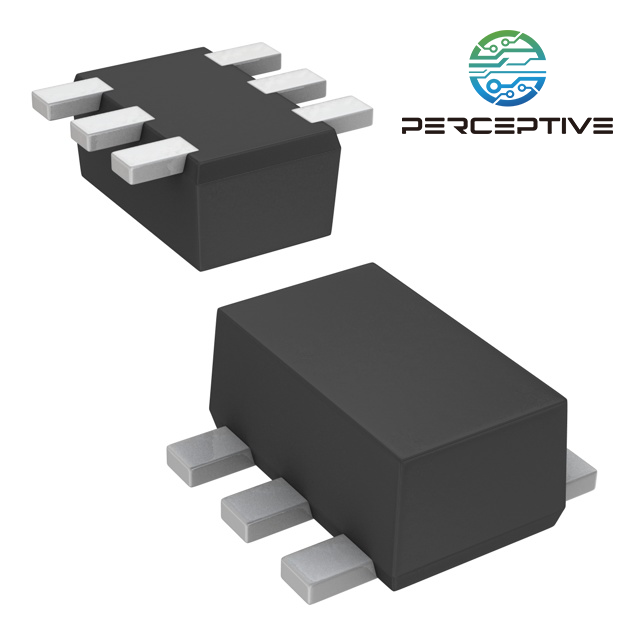
Important thermal factors include junction temperature limits, thermal resistance, and package type. Packages such as TO-220, DPAK, or power QFN are often used for applications that require better heat dissipation.
Proper PCB layout and thermal design are also essential to maintain stable operating temperatures and prevent overheating.
Application-Focused Selection
Different power management applications require different MOSFET priorities.
For example, DC-DC converters typically focus on low RDS(on) and optimized gate charge to improve switching efficiency. Battery-powered systems often prioritize low gate drive power and minimal leakage current. Motor control circuits require MOSFETs with high current capability and strong reliability under dynamic loads.
Understanding the specific requirements of the application helps engineers select the most suitable device without unnecessary cost or over-engineering.
Conclusion
Selecting the right MOSFET for power management involves evaluating several key parameters, including voltage rating, on-resistance, gate charge, and thermal performance. These characteristics directly affect system efficiency, switching behavior, and long-term reliability.
By carefully balancing these factors and matching the device to the application environment, engineers and procurement professionals can improve overall system performance while maintaining stable component supply.
For organizations sourcing power semiconductors and other electronic components, working with experienced distributors such as Perceptive Components can help ensure reliable availability and access to a wide range of MOSFET solutions for modern power management designs.