In today's mixed-signal systems, the ability to precisely generate analog voltages from digital data is critical across industrial, communication, and embedded applications. The AD5338ARMZ, developed by Analog Devices, is a compact and efficient solution that integrates multiple digital-to-analog conversion channels into a single device. For engineers and procurement specialists, understanding its capabilities can significantly simplify design decisions and improve system performance.
This article provides a practical overview of the AD5338ARMZ, including key datasheet insights, technical features, and real-world application scenarios, along with supply availability from Perceptive.
AD5338ARMZ Overview
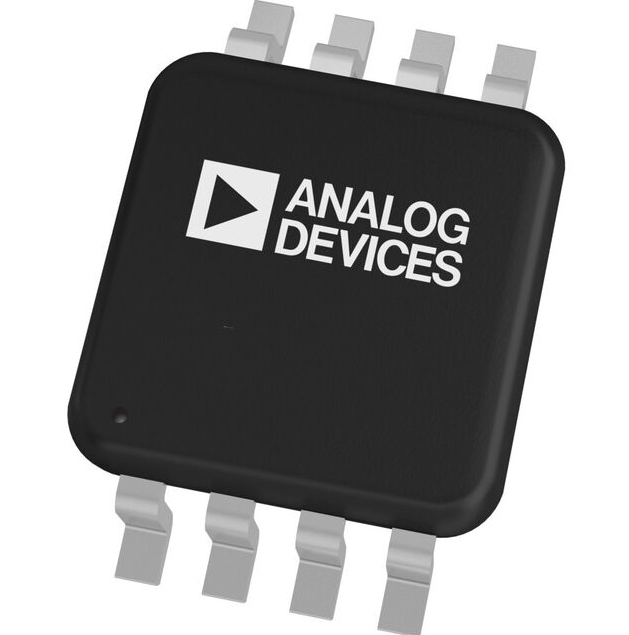
The AD5338ARMZ is an 8-channel, 10-bit voltage output DAC designed for low-power and space-constrained applications. It operates from a single 2.5 V to 5.5 V supply, making it suitable for a wide range of embedded and portable systems.
Each DAC channel includes an internal reference and output buffer, allowing designers to generate accurate analog signals without requiring extensive external circuitry. The device communicates via an I²C-compatible serial interface, enabling easy integration into microcontroller-based systems.
Key Features and Technical Advantages
1. Multi-Channel Integration for Compact Designs
With eight DAC channels integrated into a single package, the AD5338ARMZ reduces board complexity and component count. This is particularly valuable in applications where multiple control voltages are required, such as biasing, calibration, or signal trimming.
2. 10-Bit Resolution with Reliable Accuracy
The 10-bit resolution provides 1024 discrete output levels, offering a good balance between precision and cost. For many industrial and control systems, this level of resolution is sufficient to achieve stable and repeatable analog outputs.
3. Low Power Consumption
The device is optimized for low power operation, consuming minimal current during normal operation and offering power-down modes. This makes it suitable for battery-powered or energy-sensitive applications.
4. Integrated Reference and Output Buffers
Unlike some DACs that require external references, the AD5338ARMZ includes an internal reference, simplifying the design and reducing BOM cost. The integrated output amplifiers ensure stable voltage output across varying load conditions.
5. Fast Settling Time
With a typical settling time in the microsecond range, the DAC can respond quickly to digital input changes. This is important in dynamic systems such as waveform generation or closed-loop control.
6. Flexible I²C Interface
The I²C-compatible interface allows multiple devices to share the same bus, making it easy to scale systems without increasing wiring complexity.
Datasheet Insights That Matter
Beyond the basic specifications, several datasheet parameters are particularly relevant for real-world design:
Output Voltage Range: Rail-to-rail operation depending on supply voltage
Gain Error and Offset Error: Maintained within tight limits for predictable output
Power-Down Modes: Configurable to reduce power consumption when channels are idle
Thermal Stability: Designed to operate reliably across industrial temperature ranges
A practical takeaway: while 10-bit DACs are sometimes overlooked in favor of higher-resolution options, they often provide the best trade-off between performance, cost, and system complexity in real-world designs.
Typical Applications
1. Industrial Control Systems
The AD5338ARMZ is widely used in:
Programmable logic controllers (PLCs)
Actuator control systems
Process automation
Its multiple outputs allow simultaneous control of several analog parameters.
2. Signal Conditioning and Calibration
In systems requiring fine adjustment of analog signals, such as sensor calibration or offset tuning, the DAC provides stable and repeatable voltage outputs.
3. Communication Equipment
In RF and communication systems, DACs are used for biasing circuits and controlling gain stages. The AD5338ARMZ’s low power and compact size make it suitable for such roles.
4. Embedded and IoT Devices
For microcontroller-based designs, the I²C interface simplifies integration, while the low power consumption supports long operational lifetimes in IoT applications.
Design Considerations and Engineering Insights
When integrating the AD5338ARMZ into a system, several practical considerations can enhance performance:
Power Supply Decoupling: Proper decoupling capacitors help minimize noise and ensure stable output
I²C Bus Design: Ensure correct pull-up resistor values for reliable communication
Load Impedance Matching: Although the device includes output buffers, matching load conditions improves accuracy
Thermal Management: Even low-power devices benefit from good PCB layout to maintain long-term stability
An important insight is that multi-channel DACs like the AD5338ARMZ can significantly reduce firmware complexity by centralizing analog control into a single device.
Reliable Supply from Perceptive Components
For procurement professionals, component availability is just as important as technical performance. Perceptive Components offers reliable sourcing of AD5338ARMZ with stable inventory and fast global delivery. This ensures continuity in production and reduces the risk of supply chain disruptions.
Conclusion
The AD5338ARMZ stands out as a practical and efficient multi-channel DAC solution for modern electronic systems. By combining eight channels, 10-bit resolution, low power consumption, and a simple I²C interface, it addresses the needs of engineers designing compact and reliable analog control systems.
For applications where cost, space, and performance must be balanced, AD5338ARMZ remains a strong and relevant choice—and with dependable supply from Perceptive, it is readily available for both prototyping and mass production.