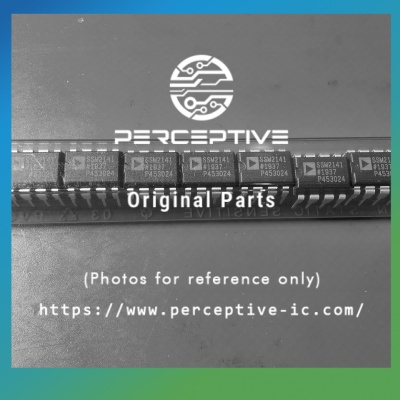
In today's high-performance electronic systems, efficient signal routing is essential to ensure speed, flexibility, and reliability. As data rates continue to increase across applications such as telecommunications, video processing, and data centers, engineers require components that can handle complex routing without compromising signal integrity. The ADN4605ABPZ digital crosspoint switch is designed to meet these challenges by offering high-speed performance, flexible configuration, and robust signal conditioning capabilities.
This article provides a practical overview of the ADN4605ABPZ, including its key features, architecture, and typical applications, helping engineers and procurement professionals better understand its value in modern designs.
Key Features and Performance Advantages
The ADN4605ABPZ is a 40 × 40 asynchronous digital crosspoint switch optimized for high-speed NRZ signal routing. It supports data rates from DC up to 4.25 Gbps per channel, making it suitable for a wide range of high-speed serial communication standards.
One of its most significant advantages is its fully nonblocking architecture. Any input can be connected to any output independently, allowing for maximum routing flexibility. This capability is especially useful in systems where signal paths must be dynamically reconfigured, such as switching equipment and redundant network designs.
Signal integrity is a major focus of the device. The ADN4605ABPZ integrates adjustable receive equalization, offering up to 12 dB of boost to compensate for signal loss over long PCB traces. On the transmit side, programmable pre-emphasis and output swing settings help maintain signal quality across extended distances. These features reduce the need for external signal conditioning components, simplifying system design.
In addition, the device maintains low jitter performance and minimal channel-to-channel skew, ensuring reliable data transmission even in timing-sensitive applications. With propagation delay around the sub-nanosecond level, it is well suited for high-speed systems requiring deterministic performance.
Architecture and Functional Overview
The ADN4605ABPZ integrates several functional blocks to enable efficient high-speed routing.
At the input stage, differential receivers accept PECL or CML-compatible signals. Each input channel includes integrated termination and equalization, allowing the device to handle degraded signals from long backplane traces. Polarity inversion is also available per channel, which simplifies PCB layout by reducing the need for trace crossovers.
The central switching matrix is a 40 × 40 crossbar that supports independent and simultaneous routing of multiple channels. This architecture allows for complex routing schemes, including multicast and broadcast configurations, which are useful in redundancy and signal replication scenarios.
On the output side, programmable drivers provide configurable output levels and pre-emphasis. This ensures that signals remain strong and clean when transmitted over cables or backplanes.
Control of the device is highly flexible. Engineers can configure routing and signal parameters through I2C, SPI, or parallel interfaces. The inclusion of dual connection maps allows rapid switching between predefined configurations, which is particularly beneficial in systems that require fast reconfiguration.
Typical Applications
The ADN4605ABPZ is widely used in applications where high-speed data routing and flexibility are critical.
In digital video systems, it supports formats such as HDMI, DVI, and SDI, enabling dynamic video switching in broadcasting and professional AV environments. Its low latency and high bandwidth ensure smooth signal transmission without noticeable delay.
In telecommunications infrastructure, the device is commonly used for fiber optic switching and high-speed backplane routing. It supports protocols such as XAUI, Fibre Channel, and Gigabit Ethernet, making it suitable for network equipment and switching systems.
Data centers and storage networks also benefit from its capabilities. The ADN4605ABPZ enables efficient interconnection between servers, storage devices, and networking components, improving system scalability and reliability.
Additionally, it is used in test and measurement equipment, where flexible signal routing is required to support multiple test configurations without changing hardware connections.
Design Considerations
When integrating the ADN4605ABPZ into a system, engineers should consider several factors to maximize performance.
Signal integrity should be carefully managed by selecting appropriate equalization and pre-emphasis settings based on PCB trace length and material. Proper impedance matching and layout practices are essential to minimize reflections and losses.
Power consumption is another important factor. Although the device is optimized for efficiency, high channel utilization can lead to increased power dissipation. Adequate thermal management, including proper PCB design and airflow, is recommended.
Finally, system designers should take advantage of the device's flexible control interfaces and dual configuration maps to simplify software control and improve system responsiveness.
Conclusion
The ADN4605ABPZ is a powerful and versatile solution for high-speed signal routing in modern electronic systems. Its combination of high bandwidth, nonblocking architecture, and integrated signal conditioning makes it an excellent choice for applications ranging from video processing to telecommunications and data infrastructure.
For engineers, it simplifies complex routing challenges while maintaining signal integrity. For procurement professionals, it represents a reliable and scalable component for demanding applications. Perceptive Components offers stable inventory and professional support for ADN4605ABPZ, helping customers ensure supply continuity and project success.
As system complexity continues to grow, components like the ADN4605ABPZ will play a key role in enabling flexible, high-performance designs.