In the electronics industry, component discontinuation is no longer an occasional disruption—it has become a recurring supply chain reality. As technology cycles accelerate and manufacturers continuously optimize their portfolios, many electronic components face shortened lifecycles. For procurement teams, the real challenge is not reacting to end-of-life (EOL) notices, but identifying which components are most likely to be discontinued before supply risks materialize.
Understanding high-risk component categories allows organizations to plan ahead, protect production continuity, and avoid costly redesigns or emergency sourcing.
Integrated Circuits with Limited Market Scope
Integrated circuits are among the most vulnerable components when it comes to sudden discontinuation. Application-specific ICs, legacy microcontrollers, older power management devices, and niche analog chips are frequently phased out as manufacturers shift resources toward newer architectures and higher-margin products.
Chips designed for a narrow customer base or tied to outdated process nodes often lose priority in fabrication planning. Once wafer capacity is reallocated, these devices may reach EOL with limited advance notice. Single-source ICs pose an even higher risk, as alternative manufacturers or drop-in replacements may not exist.
For procurement teams, ICs that lack pin-compatible successors or second-source options should always be flagged as high-risk items within the bill of materials.
Specialty Passive Components
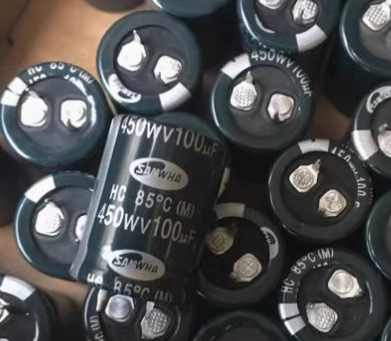
While standard resistors and capacitors are widely available, certain passive components face elevated discontinuation risk. High-capacitance MLCCs, tantalum capacitors, and custom inductors often depend on specialized materials, constrained manufacturing capacity, or specific production processes.
In recent years, supply disruptions have demonstrated that passive components can become effectively unavailable even without formal discontinuation. Capacity shifts, demand surges from automotive or consumer electronics sectors, and raw material constraints can all reduce long-term supply stability.
Procurement teams should pay close attention to passives with uncommon values, non-standard sizes, or limited approved suppliers, especially when they are critical to circuit performance.
Custom and High-Density Connectors
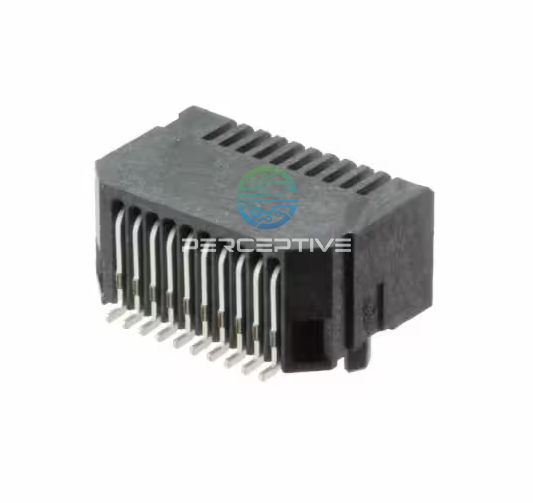
Connectors are often underestimated in obsolescence planning. Custom connector families, high-density board-to-board connectors, and application-specific cable assemblies are particularly vulnerable when product platforms evolve or interface standards change.
Because connectors are frequently designed around mechanical constraints and specific mating requirements, replacing a discontinued connector may require PCB layout changes or mechanical redesigns. This makes connector obsolescence especially disruptive for mature products with fixed form factors.
Components with proprietary designs or low annual volumes should be considered high-risk from both sourcing and redesign perspectives.
Legacy Sensors and Measurement Devices
Sensors follow rapid technology evolution cycles. Older MEMS sensors, legacy image sensors, and analog sensing devices are often discontinued as manufacturers introduce higher-precision, lower-power, or more integrated alternatives.
This presents a challenge for industrial, medical, and infrastructure equipment, where product lifecycles are significantly longer than those of the underlying components. Even when newer sensors exist, qualification and recertification efforts can be time-consuming and costly.
Procurement teams should closely monitor sensor families that are several generations behind current technology or show declining supplier support.
Components Affected by Regulatory Pressure
Environmental and compliance regulations are a common driver of sudden discontinuation. Components containing restricted substances or non-compliant materials may be phased out as manufacturers align with evolving standards such as RoHS and REACH.
In many cases, compliant replacements are introduced, but they may differ electrically, mechanically, or thermally from the original parts. When redesign or requalification is required, procurement teams must coordinate closely with engineering to manage the transition.
Parts with complex material compositions or older compliance certifications should be treated as higher-risk items.
How Procurement Teams Can Reduce Discontinuation Risk
Identifying high-risk components is only effective when paired with proactive procurement strategies:
Lifecycle Awareness: Continuously track lifecycle status and supplier roadmaps rather than relying solely on formal EOL notices.
Multi-Source Planning: Whenever possible, qualify alternative components early to reduce dependency on single-source parts.
Last-Time Buy Strategy: For unavoidable EOL scenarios, structured last-time buys with proper inventory planning can extend product lifespans.
Design Flexibility: Encourage engineering teams to prioritize designs that allow component substitution without major redesigns.
These practices help shift procurement from a reactive function to a strategic risk management role.
Conclusion
Sudden component discontinuation is an unavoidable aspect of today's electronics supply chain, but its impact can be significantly reduced through informed planning. Integrated circuits with limited market reach, specialty passives, custom connectors, legacy sensors, and compliance-sensitive components consistently represent the highest procurement risk.
By maintaining visibility into component lifecycles and integrating risk awareness into sourcing decisions, procurement teams can protect supply continuity, control costs, and support long-term product sustainability in an increasingly volatile component landscape.