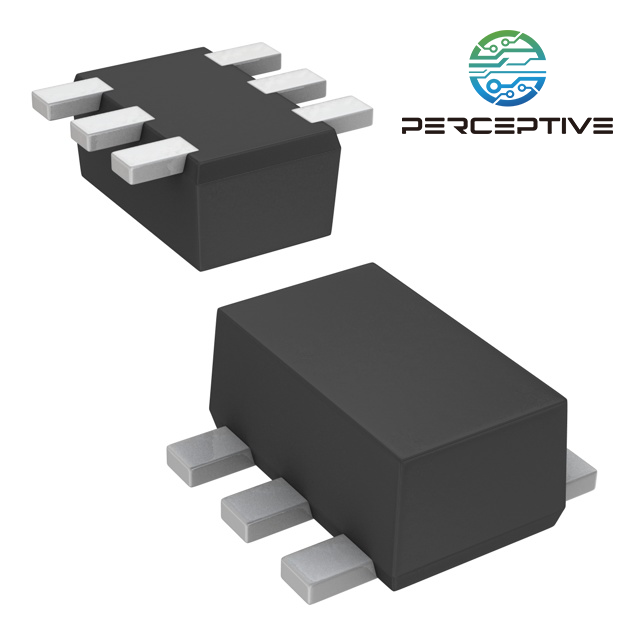
Power MOSFETs are among the most widely used semiconductor devices in modern electronics. They play a critical role in power management, motor control, automotive electronics, industrial equipment, and consumer products. However, as semiconductor technologies evolve and manufacturers continuously optimize their portfolios, even highly popular power MOSFET models can eventually be discontinued.
When a commonly used power MOSFET reaches end-of-life (EOL), procurement teams often face urgent challenges: unstable supply, rising prices, forced redesigns, and potential production delays. A reactive approach can significantly increase operational risk. Instead, companies need a structured and forward-looking procurement strategy to manage MOSFET discontinuation effectively.
1. Understand That Discontinuation Is a Predictable Process
MOSFET discontinuation rarely happens overnight. In most cases, manufacturers provide advance notices such as Product Change Notifications (PCNs), Last Time Buy (LTB) announcements, or lifecycle status updates. These signals often appear long before actual supply shortages occur.
Procurement teams should treat component lifecycle management as an ongoing task rather than an emergency response. Establishing internal processes to regularly review lifecycle status allows organizations to identify at-risk MOSFETs early and plan accordingly.
A mature procurement operation does not ask if a part will be discontinued, but when — and what the exit strategy will be.
2. Move Quickly From Stock Dependence to Alternative Planning
A common short-term reaction to MOSFET discontinuation is aggressive stockpiling. While this may temporarily protect production, it is not a sustainable solution. Excess inventory ties up cash, increases storage risk, and does not solve long-term availability issues.
A more effective approach is to parallel-track alternatives while managing remaining supply. This includes:
Identifying drop-in or near drop-in replacements
Evaluating pin compatibility, package type, and thermal characteristics
Comparing key parameters such as voltage rating, current handling, R_DS(on), and switching behavior
By initiating qualification of alternative parts early, companies can smoothly transition without production disruption once original inventory runs out.
3. Avoid "Spec-Only" Replacement Decisions
One of the most common mistakes in MOSFET replacement is focusing solely on datasheet specifications. Two MOSFETs may appear equivalent on paper but behave very differently in real-world applications.
Procurement teams should work closely with engineering to evaluate replacements under actual operating conditions, considering:
Thermal performance under load
Switching losses in the target topology
Reliability history and field performance
Long-term availability and supplier stability
A slightly higher-cost MOSFET with stable long-term supply may deliver far greater value than a marginally cheaper but uncertain alternative.
4. Use Discontinuation as an Opportunity to Optimize Design
While EOL events are often seen as negative, they can also create opportunities to improve product competitiveness. Many older MOSFETs are discontinued because newer generations offer better efficiency, lower losses, and improved thermal performance.
For some applications, transitioning to newer silicon processes or even wide-bandgap technologies can:
Reduce power losses and heat generation
Improve system efficiency and reliability
Extend the product’s market lifespan
Procurement teams play a key role here by aligning supply strategy with long-term product roadmaps, rather than simply replacing parts one-for-one.
5. Strengthen Supplier and Distributor Collaboration
When facing MOSFET discontinuation, working with reliable distributors becomes critical. Experienced distributors can provide:
Early warnings on allocation or EOL trends
Access to remaining global inventory
Cross-reference recommendations across multiple manufacturers
Support for quality verification and risk control
Rather than sourcing purely on price, procurement teams should prioritize partners with strong market visibility, technical support capability, and transparent supply channels.
6. Build Obsolescence Management Into Procurement Strategy
The most effective response to MOSFET discontinuation is prevention through planning. Leading procurement teams integrate obsolescence risk into supplier selection and BOM management from the beginning.
Key best practices include:
Avoiding single-source MOSFETs in critical designs
Maintaining approved vendor lists with multiple options
Regularly reviewing BOM risk exposure
Aligning procurement decisions with product lifecycle expectations

This proactive approach reduces emergency sourcing, stabilizes costs, and improves overall supply chain resilience.
Conclusion
Power MOSFET discontinuation is not an isolated event — it is a recurring reality in the semiconductor industry. For procurement teams, the difference between disruption and continuity lies in preparation, cross-functional collaboration, and informed decision-making.
By monitoring lifecycle signals early, qualifying alternatives systematically, collaborating closely with engineering, and partnering with knowledgeable distributors, companies can turn MOSFET obsolescence from a supply chain threat into a controlled and manageable transition.
In an environment where component availability directly impacts competitiveness, smart procurement strategy is no longer just about buying parts — it is about protecting the future of the product itself.